Use-case strategy and readiness
Identify where technology can improve access, quality, decisions or efficiency, and where another response would work better.
- Use-case discovery and prioritisation
- Readiness and risk assessment
- Roadmaps and governance
AI, digital systems and insights
Consultancy Mantra connects operating needs, people, workflows and evidence to build useful digital systems and decision support.
AI & Technology
We identify where AI or digital technology can improve a decision, workflow or service, then design the solution and support responsible adoption. Read why AI adoption is an organisational capability, not only a technology rollout.
Identify where technology can improve access, quality, decisions or efficiency, and where another response would work better.
Translate priority use cases into practical interfaces, tools, automations and implementation plans.
Help users and institutions understand, adopt and govern the solution in context.
Data & Insights
We start with the decisions that matter, then build the measures, data and dashboards your team needs to keep using them. See how teams move from dashboards to data-use capability.
Clarify outcomes, indicators, sources and analytical questions before building the reporting layer.
Create views, routines and tools that help teams interpret evidence and act with confidence.

Technology and data in practice
These representative work patterns are grounded in the services and documented work shown across this site. They describe the contribution without claiming a result that has not been measured.
An organisation may have a learning platform, repeated manual tasks and growing interest in AI, but no shared view of how those pieces should work together. The assignment starts by mapping users, decisions, information flows and constraints. Priority use cases are then separated from ideas that add novelty without enough operating value.
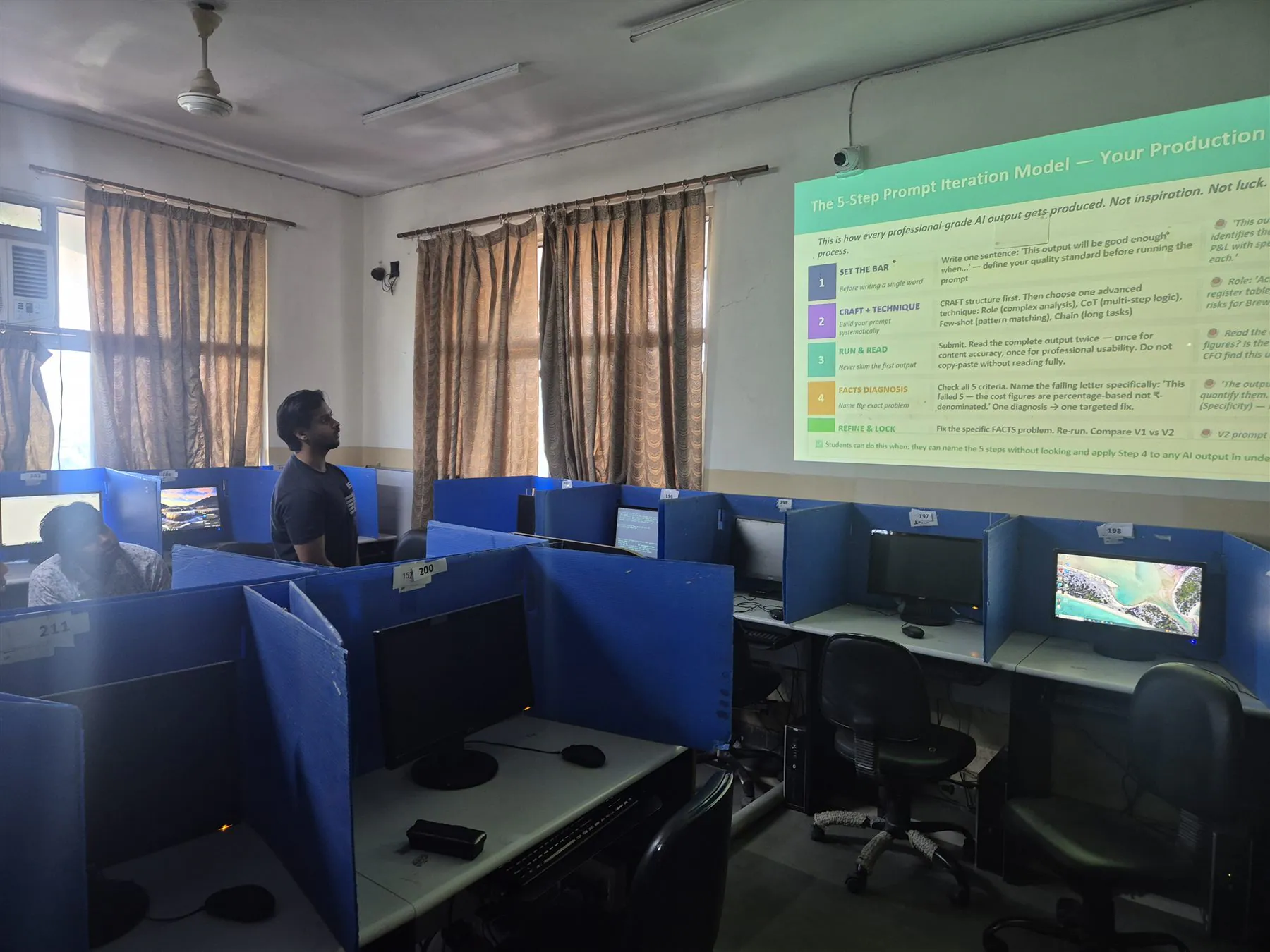
The build may connect LMS architecture, applied-AI workflows and automation design with implementation support. Adoption is treated as part of the solution: people need guided practice with the tools and clarity about where human review, data protection and governance belong. The documented applied-AI training photograph on this page shows that practical learning setting; it is evidence of the method in use, not a quantified outcome claim.
When information sits across files, reports and teams, a dashboard alone does not solve the underlying problem. The work begins by naming the decisions users must make, the questions they need answered and the definitions that must be shared. Only then can the data structure, indicators and reporting views be designed.
A practical response can combine research, data-quality checks, dashboard views and a routine for teams to interpret evidence together. Handover includes the definitions, responsibilities and user guidance needed to maintain the system. The aim is not simply more charts; it is a repeatable path from evidence to discussion, decision and follow-up.
How we deliver technology and data engagements
SEED and Consult → Build → Amplify structure delivery, while CA-PRAXIS™ can support the client capability needed to adopt and sustain the work.
Frame the outcome, workflow, users, evidence, data conditions, risks and technical constraints.
Work with users and owners to test options, readiness and the value of priority use cases.
Design, prototype and refine the workflow, product, dashboard or operating approach through real use.
Implement the solution, establish governance, enable users and transfer ownership.
Last updated: 5 August 2026
Frequently asked questions
Useful technology and data work makes operating choices explicit before implementation begins.
Not always. We first examine the decision, workflow, users and constraints. A simpler process change, clearer information or conventional automation may be more reliable. AI is prioritised where it has a defensible role and can be governed in context.
Yes. Discovery includes the current systems, integrations, source quality, access conditions and team capability. The solution can improve or connect what already exists when replacement would add cost without enough value.
Governance is considered alongside design. Relevant controls may include clear ownership, appropriate access, human review, testing, documentation and guidance for users. The exact response depends on the use case and the organisation's risk context.
A dashboard needs agreed definitions, trusted sources, a clear audience and a routine for action. We design the view around real questions and include handover so owners can maintain the data, interpret changes and improve the reporting process.
AI & Technology · Data & Insights
Tell us what you want to improve with AI, automation, digital products, data or insight.