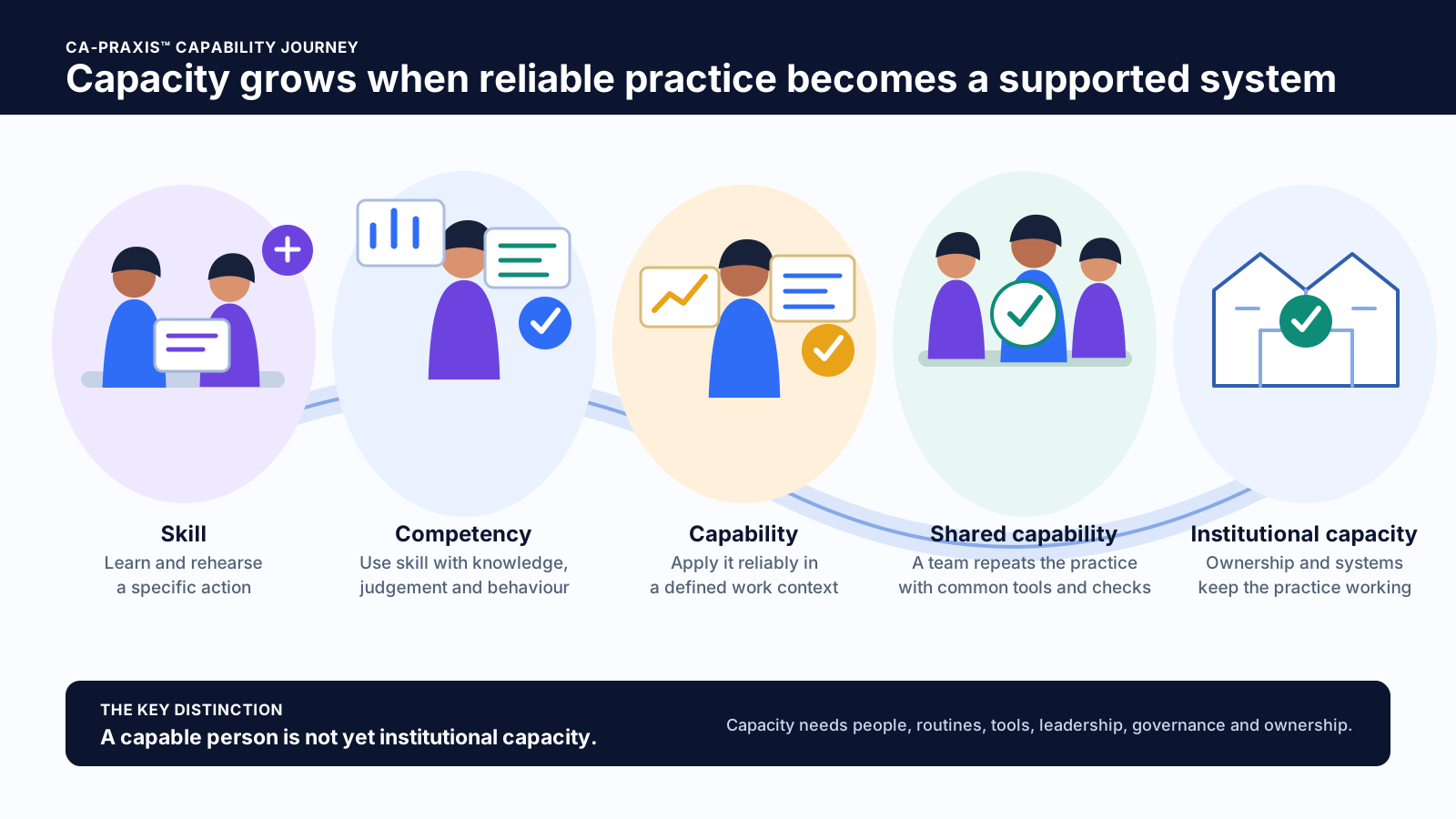
Skill
A learned ability used to perform part of a task.
CA-PRAXIS™ Capability Framework
CA means Capability. Praxis means putting an idea into practice. The framework helps a client define a capability, build it through real work, verify progress with evidence and create the conditions to sustain it.

The model in plain language
CA-PRAXIS™ is Consultancy Mantra's evidence-led capability and capacity-building framework for organisations that need an important practice to work reliably in a defined role and setting. It begins by naming the required outcome, capability, people, context, quality standard and evidence. The framework then moves through five actions—Define, Diagnose, Practise, Verify and Sustain—so learning is applied through authentic work rather than inferred from attendance or course completion. Progress is recorded on a five-level Capability Ladder, from Aware to Sustained, using the highest level fully supported by agreed evidence. The client sponsor owns the outcome, practice partners perform the work, and Consultancy Mantra guides the method and joint evidence review. A named client continuity owner then carries the routines, tools, governance and next target forward, so individual competence can become durable institutional capacity.
A learned ability used to perform part of a task.
The skills, knowledge, judgement and behaviour needed to perform to an agreed standard.
The demonstrated ability to apply a competency reliably in a defined role and context.
The ownership, leadership, tools, routines and governance that keep the capability working over time.
Five-action process
The process follows one named capability in one real setting. It starts with the required work and ends with clear client ownership.
Example capabilityDistrict programme teams use a shared dashboard to identify attendance risks, decide a response and record follow-up action.
Name the outcome, capability, people, context, quality and intended evidence.
Capability definitionReview current practice and the system conditions that help or block it.
Baseline and targetUse authentic tasks, feedback, coaching and repeated application.
Practice evidenceReview evidence together and record the highest level fully supported.
Verified levelTransfer ownership, strengthen system support and set the next target.
Continuity planCompany philosophy beneath the framework
Capability Ladder
The levels describe what can be demonstrated. They are not course stages, job grades or a measure of attendance. The right target depends on the mandate.
Agree the starting level, target and evidence before practice begins.
Review tasks, work products, observation, quality checks and system records.
Record the highest proven level, continuity owner and next target.
If evidence sits between two levels, record the lower level that is fully verified. Attendance, completion and self-report do not establish a level on their own.
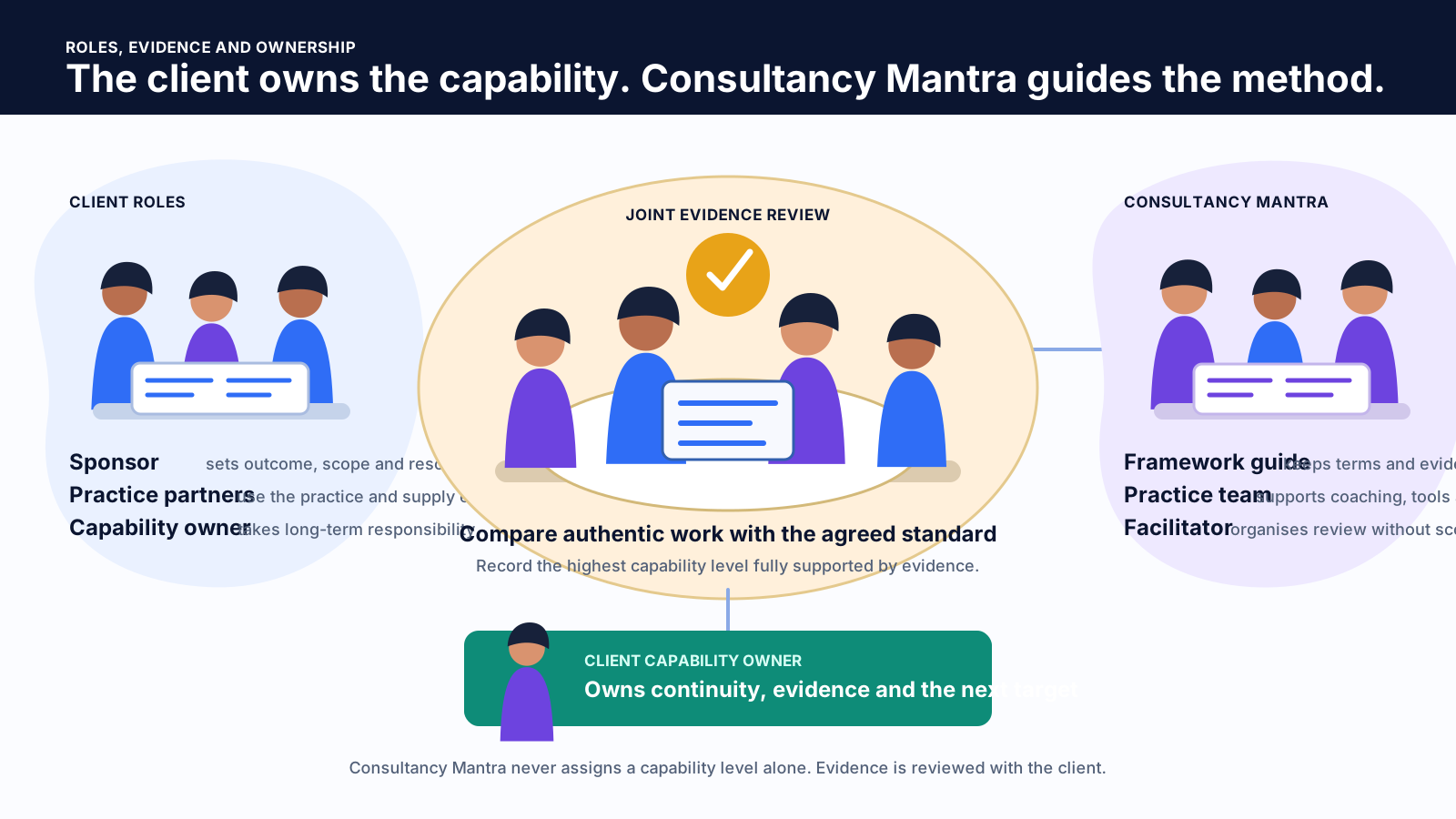
Roles and ownership
Responsibility stays clear from the first definition through evidence review and handover.
Owns the outcome, priorities, resources and major decisions.
Runs the method, protects evidence quality and records decisions.
Perform authentic work, contribute evidence and improve the practice.
The client person or role that keeps the practice, routines, tools and next target working after the engagement.
Choose by the required result
A mandate may use either framework. Use both only when the client needs both a new solution and the capability to operate and sustain it.
Common buyer questions
These answers clarify when the framework fits, how evidence is handled and what remains with the client.
Use it when the required result is stronger, verified capability in real work—for example faculty practice, AI adoption, data use, programme delivery or workforce performance. Use SEED when the primary result is a new solution such as a course, platform, workflow or operating model.
Evidence can include authentic tasks, work products, observation, quality checks and system records. The client and Consultancy Mantra review it together and record the highest level fully supported. Attendance, course completion, confidence ratings or self-report do not establish a level on their own. See the guide to choosing evidence for capability building.
No. The framework records capability verified through evidence agreed for the engagement; it does not claim external accreditation, certification or endorsement. If evidence falls between two levels, the lower fully supported level remains until stronger evidence is available.
The client does. The sponsor owns the outcome and resources, practice partners perform the work, and Consultancy Mantra guides the method. A named client continuity owner carries forward the practice, routines, tools, governance and next target.
Detailed visual reference
The handbook explains the framework boundary, four key definitions, five questions, five-action process, Capability Ladder, evidence rules, roles and worked examples.
Start with the real work
Tell us which practice needs to improve, who performs it and where it must work.
Connect Read the handbook